
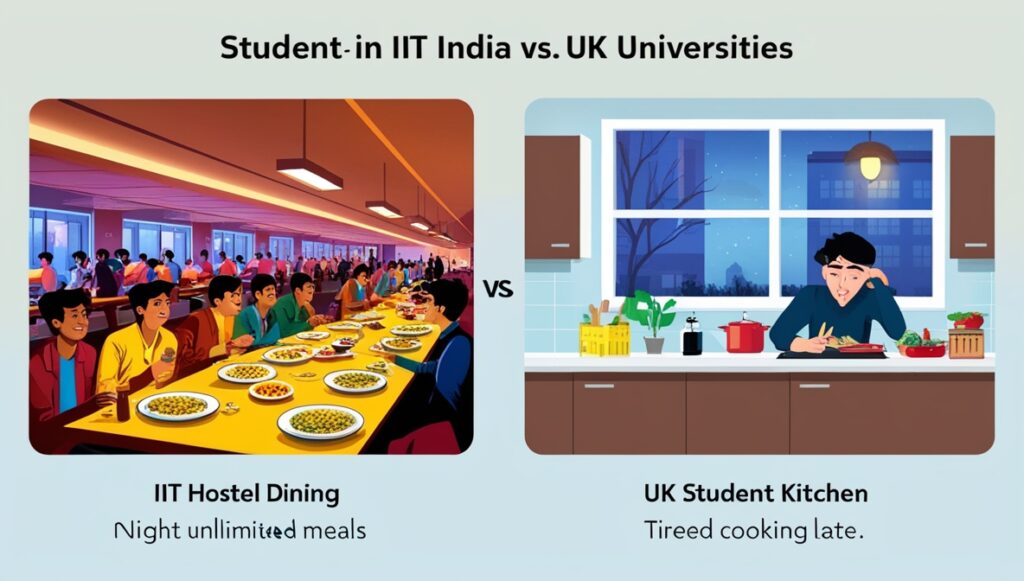
Hello everyone! As many of you know, I love revisiting old photographs. Today, while browsing through some memories, I was instantly transported back to my days at IIT Roorkee. And because I’m someone who truly enjoys good food, one thought hit me very strongly: how comfortable and well-supported student life was at IITs—especially when it came to food.
In contrast, when I look at the lifestyle of students here in the UK, especially in terms of food and daily routine, I often wonder why life feels so challenging for them.
Food: The Biggest Contrast
At IITs, students are blessed with some of the simplest yet most valuable privileges:
- Unlimited breakfast every morning, with a great variety.
- Unlimited and diverse lunch options.
- Snacks and evening tea, again with multiple choices.
- A night canteen open till 2 AM, where you could grab a hot aloo paratha and enjoy your night-out with friends.
Food was never a worry. You could focus on academics, research, projects, and still have enough energy for sports, campus events, or late-night walks. The environment allowed you to study, relax, and grow without constantly worrying about your next meal.
Now let’s look at the typical student life in the UK.
The UK Student Reality
Most students here have to:
- Cook their own meals three times a day
- Wash their own dishes
- Maintain their rooms and laundry
- Manage part-time jobs to meet living expenses
- Study and complete assignments
- Deal with higher living costs, especially food
- And do all this without any hostel mess or dining hall system
If you depend on cafés or restaurants, food is expensive. If you cook at home, it consumes a significant amount of time and effort—daily.
By 8 PM, the streets turn quiet, shops close early, and forget about finding anything fresh to eat late at night. The comfort of a 2 AM paratha is simply unimaginable here.
Honestly, I sometimes wonder: how do UK students manage all this and still study? They definitely deserve appreciation for their resilience.
Lifestyle Differences
The lifestyle gap is not just about food—it’s cultural.
At IITs:
- You can step out at midnight, sit at the canteen, chat with friends, or just walk around campus.
- Your entire day revolves around learning and exploring.
- Basic needs like food and accommodation are taken care of.
In the UK:
- Life is structured around limited time.
- You need to plan every meal.
- Part-time jobs are almost a necessity.
- Convenience is limited, especially at night.
The independence is good—but the struggle is real.
Should You Study Abroad? Think Twice—But Decide Wisely
If you’re planning to study abroad, especially in countries like the UK, do think carefully. You’ll get:
- A globally recognized degree
- Exposure to a new culture
- Beautiful experiences
- Opportunities to earn
- Amazing photos for your Instagram, no doubt
But the lifestyle will definitely be harder—no second thoughts about that.
I’m not discouraging anyone. I’m only saying: be prepared. Student life abroad demands maturity, discipline, and a lot of time management.
Student-Driven Mess System: A Unique IIT Advantage
Another important aspect of IIT hostel life is the student-driven mess system. Students themselves decide the menu, choose the brands and quality of ingredients, and maintain full transparency of food-related expenses. The mess is run by the students, for the students, with elected student representatives keeping records, managing vendors, and ensuring quality. This not only creates a fair and efficient system but also helps committee members gain real, practical experience in business management, budgeting, negotiation, and leadership—skills that stay with them for life.
Why Don’t Universities Offer Dining Halls?
This question often comes to my mind. With so many international students, why don’t universities provide dining hall or mess-like facilities? It would reduce the daily struggle and allow students to focus more on academics.
Perhaps it’s cultural, perhaps logistical—but it’s a gap worth discussing.
Your Thoughts?
This topic is rarely talked about, but it is as important as academics and career planning. If you’re a student or have studied abroad, I’d love to hear your experiences.
Feel free to share your thoughts in the comments.
Thank you for reading!